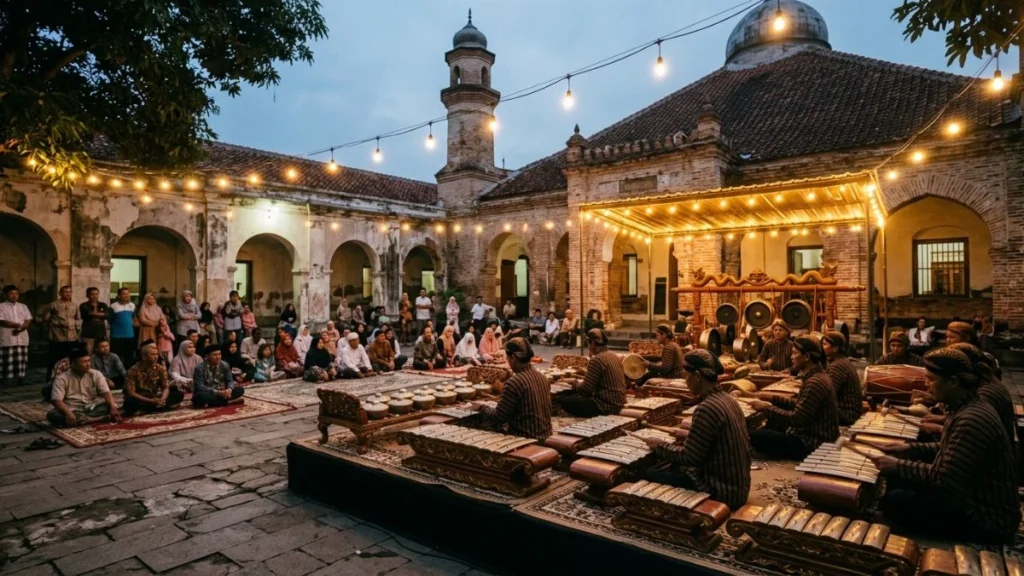
Once a year, two ancient gamelan ensembles are wheeled out of a royal palace courtyard and played continuously for a week straight, day and night, by musicians working in careful shifts. Few outside Central Java have heard of this custom at all, and even fewer young Javanese today have witnessed it firsthand. This is sekaten festival, a centuries-old royal festival that quietly marks one of the most significant fusions of faith and tradition in Javanese history — and one that’s fading from active memory faster than most Indonesians realize.
The Ritual Itself
Sekaten is a week-long ceremonial festival held in the royal cities of Yogyakarta and Surakarta (Solo) to mark Maulid Nabi, the birthday of the Prophet Muhammad. At its center are two sacred gamelan ensembles, kept within the royal palace (keraton) the rest of the year, which are ceremonially moved to the Grand Mosque courtyard and played almost without pause for several days, a practice believed to draw crowds who, historically, would gather to listen — and in doing so, be gently exposed to accompanying Islamic teaching.
The festival traditionally culminates in Grebeg Maulud, a ceremonial procession featuring gunungan — towering, mountain-shaped offerings built from rice, vegetables, and other food, carried from the palace to the mosque and then symbolically distributed to the crowd, who often scramble to grab a piece, believed to carry blessing.
Where It Comes From
Sekaten’s origins trace back to the Demak Sultanate in the 15th and 16th centuries, during the early spread of Islam across Java, and are closely tied to the Wali Songo, the revered nine saints credited with introducing Islam to the island. Rather than imposing religious conversion abruptly, tradition holds that these early Islamic leaders strategically used existing, deeply loved elements of Javanese court culture — gamelan music chief among them — as a gentle bridge toward introducing Islamic teaching to a population still steeped in Hindu-Buddhist and animist tradition.
The word “sekaten” itself is widely believed to derive from the Arabic syahadatain, referring to the twin declarations of Islamic faith, subtly Javanized in both pronunciation and cultural framing. That etymology captures the festival’s entire character: an Islamic religious purpose delivered through a thoroughly Javanese aesthetic and royal ceremonial structure, blended so completely that separating the two feels almost artificial.
Modern Practice
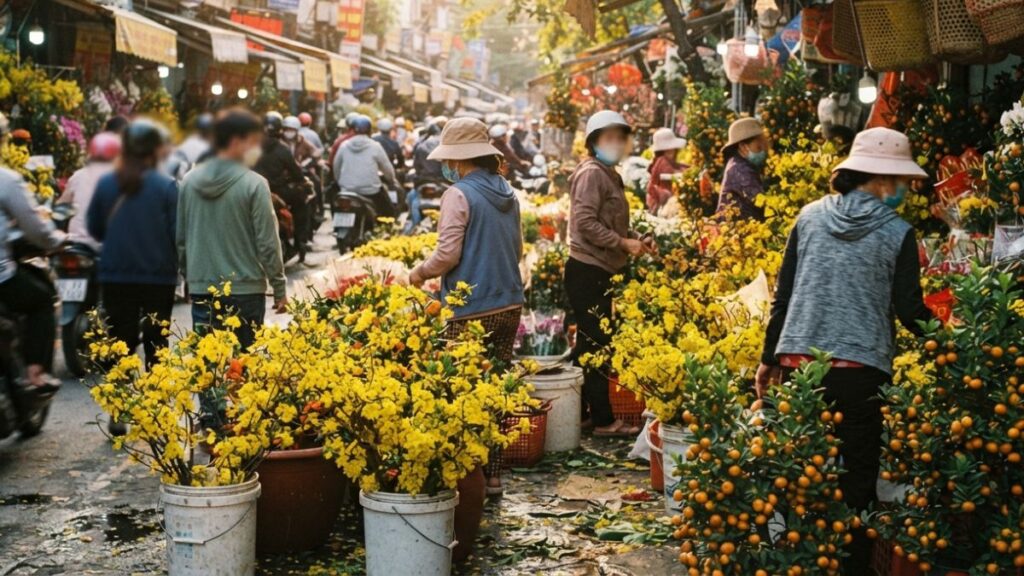
Today, sekaten persists most visibly in Yogyakarta and Surakarta, maintained largely through the ongoing ceremonial role of their respective royal courts, which still regard the festival as an important expression of royal and religious duty. The week-long gamelan performance and the Grebeg Maulud procession continue to draw crowds, though increasingly the event has folded into a broader accompanying night market, drawing many attendees more for the food stalls, rides, and general festivity than for the ceremonial core itself.
This shift is at the heart of why sekaten is fading in a particular, quiet way: not disappearing outright, but gradually losing its original meaning for a large share of younger attendees, who may visit the surrounding market for years without ever really registering the sacred gamelan performance or the procession as anything beyond festive background noise. Older residents and palace-affiliated custodians often express quiet concern about this generational drift, even as the festival’s outer shell — the crowds, the market, the annual date — persists reliably every year.
What Outsiders Get Wrong
Casual visitors and even many younger Indonesians often assume sekaten is primarily a secular cultural festival or seasonal fair, missing its specific religious origin and ongoing ceremonial function tied to royal Islamic tradition. The night market surrounding the event, while genuinely popular and enjoyable, is a modern accompaniment layered on top of a much older, more solemn ceremonial structure, not the festival’s original purpose.
There’s also a common assumption that sekaten is uniformly celebrated across Java, when in practice it remains specifically and deeply tied to the royal courts of Yogyakarta and Surakarta, with limited equivalent observance elsewhere on the island, making it a distinctly localized rather than island-wide tradition.
Reader FAQ
What does sekaten actually celebrate?
It marks Maulid Nabi, the birthday of the Prophet Muhammad, commemorated through a royal Javanese ceremonial structure built around sacred gamelan music and a ceremonial food procession.
Why is gamelan music central to an Islamic celebration?
Tradition holds that early Islamic leaders on Java used gamelan, an already deeply loved element of Javanese court culture, as a gentle, familiar entry point for introducing Islamic teaching to the population.
Is sekaten still widely attended today?
Yes, though largely through the surrounding night market and festivities rather than the ceremonial gamelan performance and procession, which draws a smaller, often older, more ceremonially engaged crowd.
Where can you experience sekaten?
Primarily in Yogyakarta and Surakarta (Solo), the two Central Javanese cities whose royal courts continue to maintain the ceremonial tradition annually.
What is Grebeg Maulud?
The ceremonial procession that closes the sekaten festival, featuring towering mountain-shaped offerings called gunungan, carried from the palace to the mosque and then distributed to the crowd as a symbol of blessing.