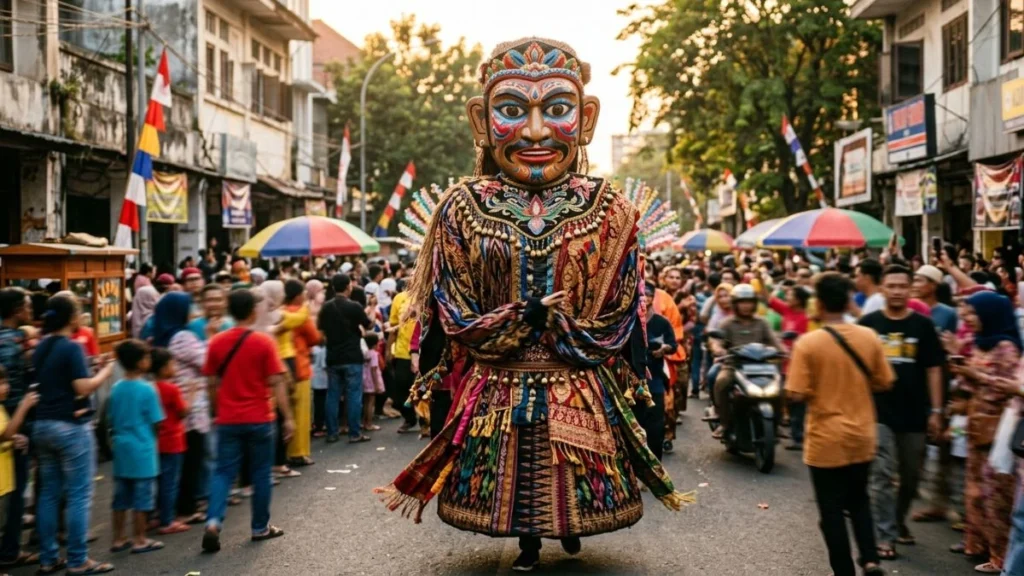
Along the southern coast of Java, hotel staff still leave a specific room permanently unbooked, out of respect rather than superstition alone. Beachgoers are warned, without much explanation needed, never to wear green near the water. This is the enduring reach of Nyi Roro Kidul, the legendary Queen of the Southern Sea, a figure so deeply woven into Javanese cultural memory that even people who don’t consider themselves particularly superstitious still quietly follow her rules.
The Legend Itself
Nyi Roro Kidul is described in Javanese folklore as a powerful spirit queen who rules the Indian Ocean along Java’s southern coastline, most closely associated with Parangtritis Beach near Yogyakarta. Accounts of her vary, but she’s most often depicted as a woman of extraordinary, otherworldly beauty, dressed in green, who commands the sea itself and can pull unsuspecting swimmers beneath the waves to join her underwater kingdom.
The most famous origin story tells of a princess, sometimes named Kadita, cast out of her royal household — versions differ on whether it was due to a curse, a stepmother’s jealousy, or a skin affliction — who wandered to the southern coast in despair and either threw herself into the sea or was transformed upon entering it, emerging as the immortal ruler of the southern waters. Other versions frame her less as a fallen princess and more as an ancient, pre-existing spiritual force of the ocean itself, later folded into royal Javanese mythology.
Where It Comes From
The legend’s roots stretch back centuries into Javanese cosmology, well before it became entangled with royal political history. Its most significant historical layer arrived through the Mataram Sultanate, whose rulers claimed a symbolic, even marital, spiritual bond with Nyi Roro Kidul, positioning royal legitimacy as partly sanctioned by her favor. This connection wasn’t merely folkloric flourish — it was politically useful, tying the ruling dynasty’s authority to a powerful, ancient spiritual force the population already respected and feared.
That royal association persists in a very tangible way today: the Yogyakarta Sultanate maintains ceremonial ties to the legend, including annual offerings cast into the sea, continuing a tradition understood as maintaining harmony between the human and spiritual rulers of the land and sea respectively.
How It’s Practiced and Believed Today
The most widely known living rule tied to the legend is the warning against wearing green — particularly a specific bright shade sometimes called “Nyi Roro Kidul green” — while swimming along Java’s southern coast. The reasoning offered varies depending on who’s telling it: some say the color attracts her attention, others say it makes swimmers harder to spot against the waves by rescuers, blending folklore explanation with practical safety concern in a way that’s become inseparable over time.
Certain hotels along the southern coast, most famously one in Parangtritis, maintain a specific room understood to be reserved for her, left unoccupied or treated with particular ceremonial respect, regardless of the hotel’s own religious affiliation or the personal beliefs of individual staff. Local fishing communities along the southern coast continue seasonal offering ceremonies, tossing flowers, food, and symbolic items into the sea, framed as a gesture of respect and a request for safety and good fortune from the water’s ruler.
Belief in the legend today spans a wide spectrum — from devout, literal acceptance among some coastal communities, to a kind of cultural-respect observance among people who don’t necessarily believe the spirit literally exists but follow the customs anyway, out of habit, family tradition, or simple caution around a story too deeply embedded to casually dismiss.
What Outsiders Often Get Wrong
Visitors sometimes treat the legend as purely a tourist curiosity or a spooky story for beach-day thrills, missing how seriously many locals, especially older generations and coastal communities, actually hold the associated customs. Casually wearing green for a beach photo, meant innocently, can visibly unsettle nearby locals in a way that surprises tourists who assumed the whole thing was folklore-as-entertainment rather than a living, respected tradition.
Another common misconception is treating Nyi Roro Kidul purely as a malevolent figure, akin to a monster story meant to frighten children. In much of Javanese tradition, she’s regarded with a more complicated mix of reverence, fear, and respect — closer to a powerful, morally ambiguous ruler than a straightforward villain, deserving of caution and courtesy rather than simple avoidance.
FAQ
Why can’t you wear green at beaches in southern Java?
Local belief holds that a specific shade of green attracts Nyi Roro Kidul’s attention and may increase the risk of being pulled into the sea. A practical safety explanation — that green is harder to spot in ocean water during a rescue — has also become intertwined with the tradition over time.
Is Nyi Roro Kidul considered evil?
Not straightforwardly. She’s generally regarded as a powerful, complex spiritual ruler deserving of respect and caution, rather than a purely malevolent figure in most traditional interpretations.
Do people still make offerings to her today?
Yes, particularly in fishing communities along Java’s southern coast and through ceremonial traditions maintained by the Yogyakarta Sultanate, which include annual offerings cast into the sea.
Is the legend connected to Indonesian royalty?
Yes, historically the Mataram Sultanate claimed a symbolic spiritual bond with Nyi Roro Kidul to help legitimize royal authority, a connection the Yogyakarta Sultanate continues to honor ceremonially today.
Should tourists take the legend seriously?
Out of respect for local customs, yes — avoiding green clothing near southern Java’s beaches and treating related traditions with courtesy is generally appreciated by local communities, regardless of a visitor’s personal beliefs.