Tet Vietnamese New Year is Vietnam’s most important annual celebration, bringing millions of people home for family reunions, ancestor veneration, and the country’s largest seasonal migration. Roads become congested for days, while trains and flights sell out weeks in advance as families across Vietnam and the global Vietnamese diaspora make the journey home. Behind the fireworks and red envelopes lies a holiday rooted in tradition, family responsibility, and cultural continuity that reaches far beyond the festivities themselves.
What It Actually Marks
Tết Nguyên Đán, commonly shortened to Tết, marks the Vietnamese Lunar New Year, following the same lunar calendar system that determines Chinese New Year, typically falling between late January and mid-February. Beyond simply marking a new calendar year, Tết carries deep significance around renewal, ancestral remembrance, and family reunion — it functions simultaneously as a spring festival, a household reset, and, most importantly for many Vietnamese people, the single most important occasion of the year to return home.
The holiday traditionally spans several days, though preparations and associated customs extend well beyond the main celebration itself, encompassing everything from house cleaning and debt-settling beforehand to specific rituals observed on each of the first several days of the new year.
Where It Comes From
Tết’s roots trace back centuries, shaped by shared cultural and religious threads across East and Southeast Asia, particularly ancestor veneration practices and lunar calendar systems with deep historical ties to Chinese cultural influence, though Vietnamese Tết developed its own distinct customs, symbolism, and regional variations over time. Ancestor worship sits close to the holiday’s spiritual core — households prepare offerings for deceased relatives, and the belief that ancestral spirits return to visit the family home during Tết shapes much of the ritual seriousness surrounding the celebration.
The emphasis on starting the year cleanly — clearing debts, resolving conflicts, cleaning the home thoroughly before the new year begins — reflects a broader cultural logic that how the first days of the year unfold sets a symbolic tone for the months that follow, making careful preparation and correct ritual observance considerably more than a formality.
How It’s Practiced Today
Modern Tết observance centers heavily on family reunion, and the scale of travel involved is genuinely enormous — the days immediately before Tết represent one of the largest annual human migrations in Southeast Asia, as workers and students return from cities to their hometowns, and overseas Vietnamese communities travel back from abroad wherever possible. This journey home carries an emotional weight closely connected to the longing described by nhớ, the Vietnamese word for a deep, persistent missing explored elsewhere on this site — Tết represents the year’s central, anticipated resolution of exactly that feeling for countless separated families.
Specific customs mark the celebration distinctly: lucky money in red envelopes (lì xì) given to children and unmarried younger relatives, elaborate offerings and altar preparations honoring ancestors, specific foods like bánh chưng (a dense, symbolic square rice cake) prepared in the days beforehand, and considerable attention paid to who visits the household first in the new year, since the first visitor is traditionally believed to influence the household’s fortune for the entire year ahead.
What Outsiders Often Get Wrong
International coverage sometimes treats Tết as roughly equivalent to a generic “Asian New Year” celebration without engaging with its specifically Vietnamese customs, regional variations, and historical weight, particularly its deep connection to family reunion culture shaped by decades of war-era displacement and, more recently, large-scale internal migration for work.
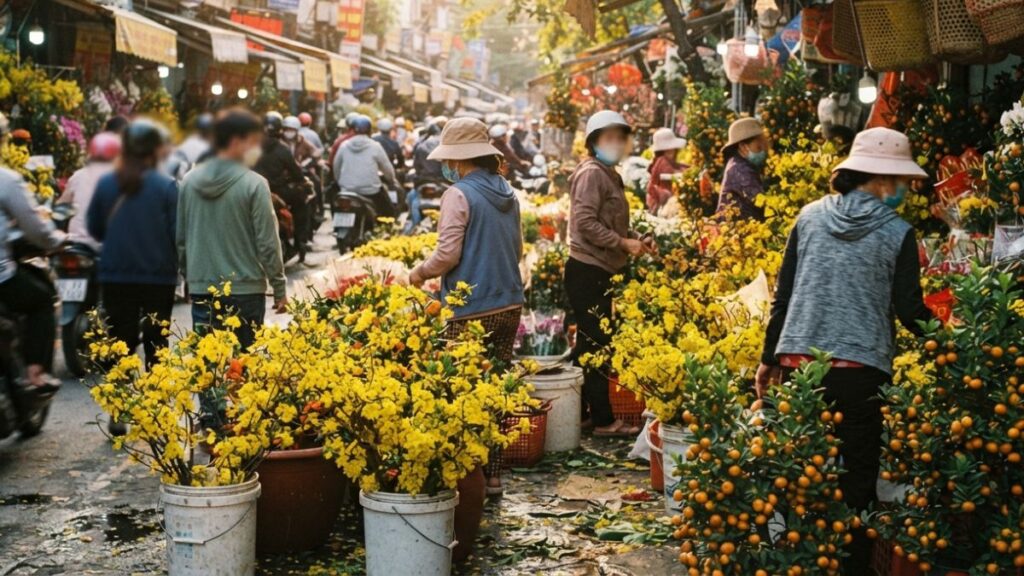
There’s also a tendency to focus purely on Tết’s festive, decorative elements — fireworks, red envelopes, flower markets — while underappreciating its more solemn ancestral and household-renewal dimensions, which many Vietnamese families observe with considerable seriousness well before the celebratory public elements begin.
FAQ
Is Tết the same as Chinese New Year?
They share the same lunar calendar system and some overlapping customs due to historical cultural exchange, but Tết has developed distinctly Vietnamese traditions, foods, and regional variations of its own.
Why is family reunion so central to Tết?
The holiday is deeply tied to ancestor veneration and household renewal, making the physical presence of family members, and honoring those who’ve passed, a core part of properly observing the new year.
What is lì xì?
Lucky money given in red envelopes, typically from married adults or elders to children and unmarried younger relatives, similar in spirit to angpao traditions found in Chinese-influenced cultures across Southeast Asia.
Why does the first visitor of the new year matter?
Vietnamese tradition holds that the first person to visit a household in the new year influences that household’s fortune for the year ahead, making this a carefully considered custom in many families.
How long does Tết celebration typically last?
The core celebration spans several days, though associated preparations and customs extend well beyond that, with many workplaces and schools closing for an extended period around the holiday.