Songkran vs Nyepi vs Thaipusam is a fascinating comparison of three of Southeast Asia’s most iconic festivals. Ask what a New Year celebration looks like, and most people picture fireworks and countdowns. Southeast Asia complicates that picture beautifully. Within a few thousand kilometers of each other, these three traditions mark significant calendrical or religious new-year moments in ways that couldn’t be more different from one another—one soaks entire cities in water, one demands complete silence, and one involves ritual devotion through physical endurance. Comparing Songkran vs Nyepi vs Thaipusam side by side reveals just how much a single occasion—marking time, renewal, or devotion—can diverge across neighboring cultures.
Songkran (Thailand, and parts of Laos, Myanmar, Cambodia)
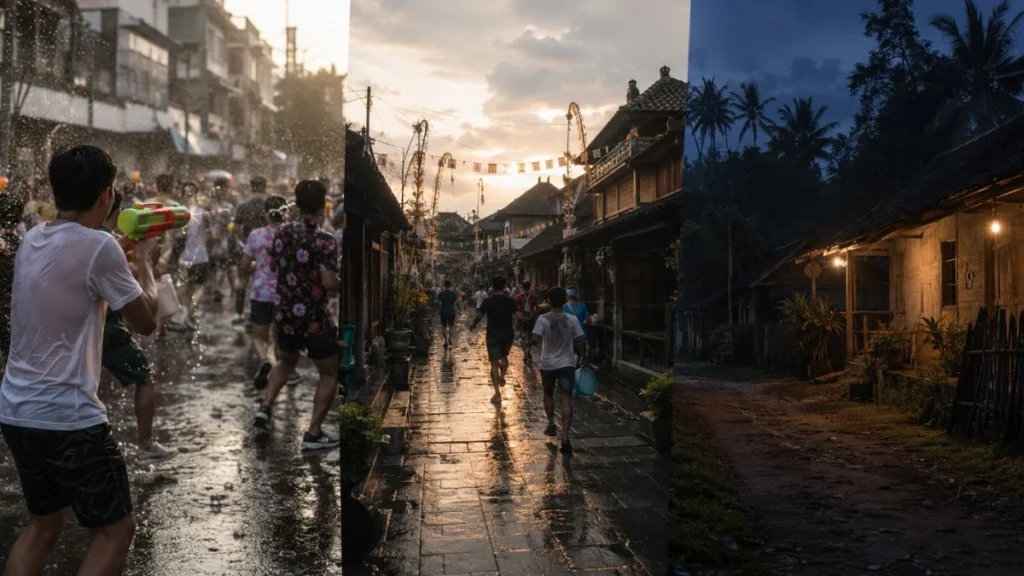
Songkran marks the traditional Thai New Year, based on the solar calendar, and is instantly recognizable as one of the most joyfully chaotic public celebrations in the world — city streets transformed into massive, days-long water fights, with residents and visitors alike drenching each other using buckets, hoses, and water guns. Beneath the modern party atmosphere lies a genuinely reverent origin: water traditionally symbolizes purification and the washing away of misfortune from the previous year, and the custom historically centered on gently pouring water over Buddha images and the hands of elders as a mark of respect, a practice still very much observed alongside the larger public celebrations.
Songkran typically falls in mid-April and has become a major tourist draw, particularly in cities like Chiang Mai and Bangkok, where the celebration’s scale has grown considerably in recent decades — sometimes, to the concern of more traditionally minded observers, overshadowing the quieter religious rituals at its core.
Nyepi (Bali, Indonesia)
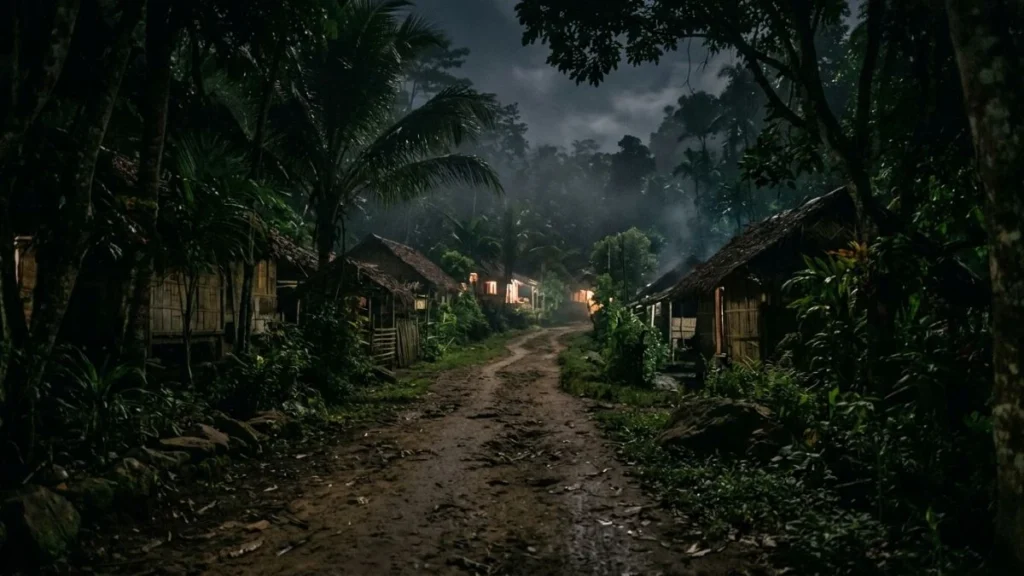
Nyepi, covered in full elsewhere on this site, marks the Balinese Hindu New Year through almost the exact opposite approach: a full 24 hours of enforced island-wide silence, darkness, and stillness, observed through four specific restrictions on fire, work, travel, and entertainment. Rather than celebrating the new year with noise and gathering, Nyepi treats total stillness itself as the more meaningful way to mark renewal, framed partly as a way of discouraging malevolent spirits and partly as a structured day of reflection and fasting.
The night before Nyepi, by contrast, is the loudest night of the Balinese calendar, featuring the ogoh-ogoh parade of large demonic effigies, before the entire island shifts abruptly into its enforced quiet the following day — a dramatic before-and-after structure entirely its own among regional new year traditions.
Thaipusam (Malaysia, Singapore, and Tamil Hindu communities more broadly)
Thaipusam isn’t a new year celebration in the calendrical sense the other two are, but it shares the broader function of marking a significant, renewal-oriented occasion on the Tamil Hindu calendar, observed with particular scale and visibility in Malaysia and Singapore’s large Tamil communities. The festival honors Lord Murugan and is most famous for its devotees carrying kavadi — ornate physical structures, sometimes elaborately decorated frames pierced through the skin with hooks and skewers — in a demonstration of devotion, discipline, and gratitude, often following vows made in exchange for blessings received.
Malaysia’s Batu Caves hosts one of the largest annual Thaipusam gatherings in the world, drawing enormous crowds of devotees and observers to witness processions culminating in a steep climb up hundreds of steps to the cave temple, a physically demanding pilgrimage that forms the ritual’s emotional and spiritual centerpiece.
What These Three Traditions Reveal When Compared
Placed side by side, Songkran, Nyepi, and Thaipusam demonstrate that “marking significant time” in Southeast Asia carries no single template. Songkran externalizes renewal through communal, joyful public ritual involving water and other people. Nyepi internalizes renewal through enforced solitude, silence, and reflection, deliberately minimizing outward activity. Thaipusam channels devotion through individual physical endurance and public demonstration of personal faith and gratitude, a fundamentally different relationship between the individual and the collective than either of the other two.
Each tradition also reflects its originating religious framework distinctly — Theravada Buddhist influence shaping Songkran’s water-and-merit symbolism, Balinese Hindu cosmology shaping Nyepi’s spirit-appeasing silence, and Tamil Hindu devotional practice shaping Thaipusam’s physical penance — while all three remain deeply embedded in specific national and regional identities well beyond their religious origins alone, drawing large secular and tourist audiences who may engage with the spectacle without necessarily sharing the underlying faith.
FAQ
Are Songkran, Nyepi, and Thaipusam all New Year celebrations?
Songkran and Nyepi both mark New Year according to their respective calendars. Thaipusam isn’t a new year festival specifically, but shares a similar function of marking a significant, renewal-oriented occasion within its religious calendar.
Which of these traditions is most tourist-friendly to observe or participate in?
Songkran is generally the most accessible and participatory for visitors, given its public, celebratory nature. Nyepi restricts even tourists to their accommodations by local regulation, while Thaipusam, though open to observers, centers on deeply personal religious devotion that visitors should approach with particular respect and sensitivity.
Why does Nyepi involve silence while Songkran involves loud celebration?
The difference reflects distinct religious and cultural frameworks — Nyepi’s Balinese Hindu tradition frames stillness as spiritually protective and reflective, while Songkran’s Buddhist-influenced water rituals frame communal celebration and purification as the more fitting way to mark renewal.
Is Thaipusam’s body piercing practice mandatory for all participants?
No — kavadi carrying and piercing is undertaken by devotees who have made a specific vow, often in exchange for blessings received, while many other participants and observers take part in the broader festival without this particular practice.
Are any of these traditions changing over time?
Yes, all three continue evolving — Songkran has grown considerably as a tourist spectacle, Nyepi’s core restrictions remain firmly enforced by law, and Thaipusam continues to draw large crowds while facing occasional debate around safety and modern regulation of its more intense devotional practices.