For fifteen days each year, Cambodian pagodas fill before dawn with families carrying rice, offering it not just for merit or ceremony, but specifically for ancestors believed to be temporarily released from a realm of suffering, hungry and searching for descendants who remember them. Pchum Ben Festival is one of Cambodia’s most significant religious observances, and its underlying premise is considerably more urgent and sobering than typical ancestor-remembrance holidays elsewhere in the world.
The Ritual Itself
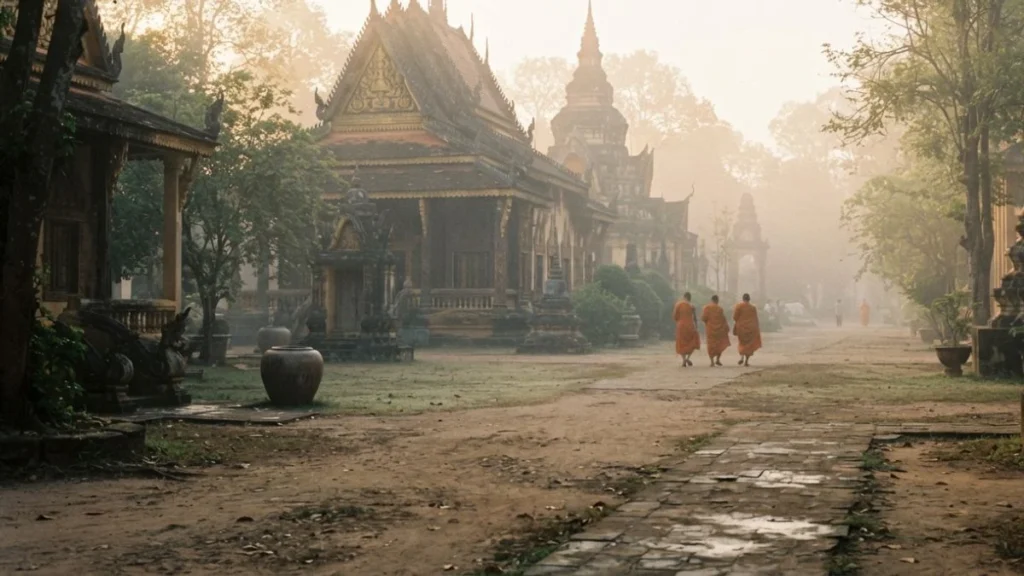
Pchum Ben, meaning roughly “gathering together” or “meeting of the alms,” spans fifteen days on the Khmer lunar calendar, typically falling in September or October, culminating in the most significant final day, often simply called Pchum Ben day. Throughout the observance period, Cambodian Buddhists visit pagodas, frequently before sunrise, to make food offerings to monks and, critically, to specifically dedicate merit and offerings to deceased ancestors, particularly those believed to be suffering in a realm between death and rebirth.
A distinctive practice involves offering small balls of rice, sometimes thrown onto pagoda grounds specifically for wandering, hungry ancestral spirits who may not have living descendants able to properly honor them elsewhere — an act of collective spiritual charity extending beyond one’s own direct family lineage to encompass potentially forgotten or neglected spirits more broadly.
Where It Comes From
Pchum Ben’s theological roots draw on Theravada Buddhist beliefs regarding karma, rebirth, and specifically the preta realm — a state of existence for spirits suffering from unresolved negative karma, often depicted as perpetually hungry and unable to find peace without intervention from living descendants performing merit-transferring rituals on their behalf. The fifteen-day period is traditionally understood as a window during which the boundary between the living and this suffering spirit realm temporarily thins, allowing ancestors genuine opportunity to receive merit offered by descendants.
This theological framework carries real weight and urgency within traditional Khmer belief: failing to properly participate in Pchum Ben isn’t viewed merely as skipping a nice cultural tradition, but as potentially leaving one’s own ancestors without needed spiritual relief during their one significant annual opportunity to receive it — a considerably higher-stakes framing than many ancestor-honoring traditions found elsewhere.
Modern Practice
Pchum Ben remains a genuinely major, widely observed holiday across contemporary Cambodia, marked by an official multi-day public holiday allowing widespread travel back to home provinces and ancestral pagodas, not unlike the family-reunion travel patterns seen around Vietnam’s Tết celebration explored elsewhere on this site, though rooted in a distinctly different religious framework and specific ritual purpose.
Families typically visit multiple pagodas across the fifteen-day period, particularly ancestral or family-associated pagodas in their home regions, believing that visiting more locations increases the chances of successfully reaching and providing merit to all deceased relatives and ancestors, whose specific location in the spirit realm isn’t something the living can know for certain. The pre-dawn offering visits reflect the belief that spirits are most able to receive offerings during these early hours, giving the observance a genuinely demanding, devotionally serious daily rhythm across the full fifteen-day period rather than a single concentrated celebration.
Younger, urban Cambodians increasingly balance full traditional participation with modern work and travel constraints, though the holiday retains considerable cultural and religious weight across generations, with even less religiously observant families often still participating in at least the culminating final day’s rituals.
What Outsiders Often Get Wrong
Visitors and international coverage sometimes describe Pchum Ben loosely as a general “Cambodian ancestor festival” without engaging with its specific, theologically serious premise regarding ancestral suffering and merit transfer, missing the meaningful distinction between casual ancestor remembrance and Pchum Ben’s more urgent framework of active spiritual rescue.
There’s also a tendency to compare Pchum Ben too casually to other regional ancestor-honoring traditions without noting genuine differences in theological structure and stakes — while sharing surface similarities with various ancestor veneration practices across Buddhist and broader Asian traditions, Pchum Ben’s specific Theravada Buddhist framework around the preta realm gives it a distinct religious logic worth understanding on its own terms.
FAQ
How long does Pchum Ben last?
The full observance spans fifteen days on the Khmer lunar calendar, typically in September or October, culminating in a particularly significant final day.
What is the significance of throwing rice balls at pagodas?
This practice specifically offers merit to wandering ancestral spirits who may lack living descendants able to honor them directly, extending the observance’s charitable intent beyond one’s immediate family.
Why do offerings happen before dawn?
Traditional belief holds that ancestral spirits are most able to receive offerings during these early morning hours, giving the fifteen-day observance its demanding daily rhythm.
Is Pchum Ben similar to Vietnam’s Tết or China’s ancestor-honoring traditions?
It shares a general theme of ancestor remembrance but is rooted in a distinct Theravada Buddhist theological framework specifically concerning the preta suffering realm, giving it a different underlying religious logic and urgency.
Is Pchum Ben still widely observed in modern Cambodia?
Yes, it remains a major public holiday and significant religious observance, with widespread travel and participation across generations, even as younger, urban Cambodians balance full traditional observance with modern constraints.