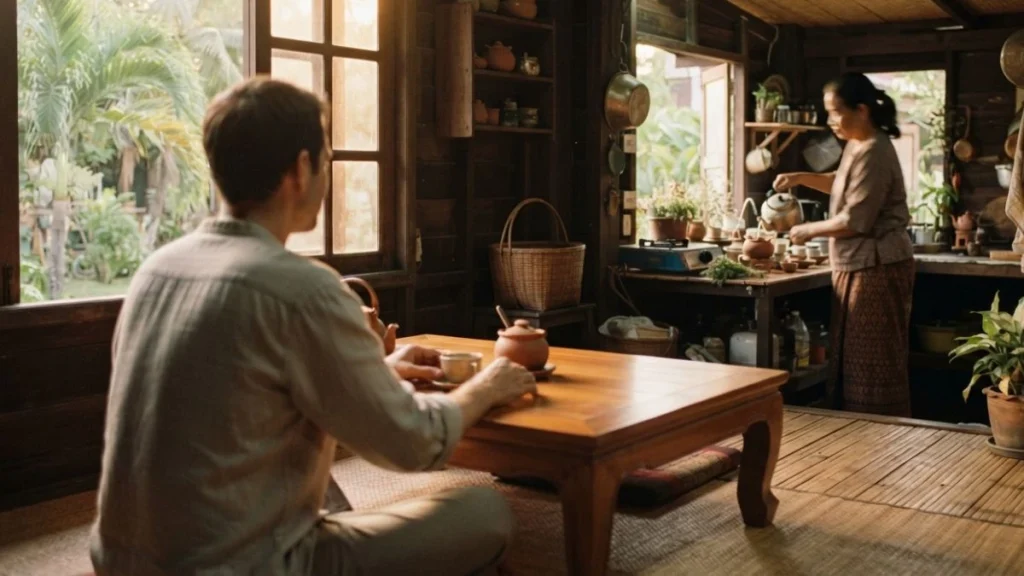
A Thai coworker needs help with a task but won’t ask directly, hoping instead that someone notices and offers. A guest quietly goes without something they actually want rather than risk inconveniencing their host. These moments trace back to kreng jai, a concept so central to Thai social interaction that understanding it can genuinely change how you read Thai communication, both what’s said and, just as often, what’s carefully left unsaid.
What It Literally Means
Kreng jai combines kreng, meaning to be in awe of or deferential toward, and jai, meaning heart or mind — together describing a deep reluctance to impose on, inconvenience, or trouble someone else, often to the point of sacrificing one’s own comfort, preference, or needs rather than risk burdening another person. It’s frequently translated as “consideration” but that word barely scratches the surface of how deeply and pervasively kreng jai shapes everyday Thai behavior.
The concept carries a strong self-effacing quality — a kreng jai person actively minimizes their own presence, requests, and needs in deference to the comfort of others, particularly those of higher status, older age, or greater social authority.
Where It Comes From
Kreng jai is closely tied to Thai Buddhist values around humility, restraint, and non-imposition, as well as Thailand’s broader social hierarchy and etiquette systems, which place significant emphasis on maintaining smooth, harmonious interactions and avoiding direct confrontation or visible discomfort in social settings. Scholars studying Thai communication patterns have long identified kreng jai as one of the central organizing principles of Thai interpersonal behavior, shaping everything from workplace dynamics to family relationships to casual social interactions with strangers.
The concept sits within a broader Thai cultural emphasis on sanuk (fun, ease) and social harmony, where visible conflict, direct confrontation, or making someone else feel obligated or uncomfortable is generally avoided wherever possible, even at real personal cost to the person practicing kreng jai.
How It’s Actually Used Today
Kreng jai shapes an enormous range of everyday Thai interactions, often in ways invisible to outsiders unfamiliar with the concept. Someone experiencing genuine discomfort — too cold, too hot, hungry, needing help — may simply endure it silently rather than mention it, out of kreng jai toward whoever might feel obligated to respond. A host might insist repeatedly that a guest’s needs are no trouble at all, even when accommodating them requires real effort, because acknowledging the inconvenience directly would undercut the host’s own kreng jai toward the guest’s comfort.
Workplace dynamics are particularly shaped by kreng jai: employees may hesitate to ask a busy superior for help or clarification, instead trying to figure things out alone rather than “bother” someone more senior, a pattern that can occasionally create real communication gaps in professional settings, particularly involving Western colleagues or managers unfamiliar with the underlying cultural logic and expecting more direct requests or feedback.
This creates a genuinely challenging dynamic for visitors and expatriates: Thai hosts, colleagues, and friends practicing kreng jai will often insist everything is fine, that no help is needed, or that a preference doesn’t matter, even when it clearly does — reading past the literal words to the underlying kreng jai beneath them becomes an important, if difficult, skill for meaningfully navigating Thai social life.
Why English Doesn’t Have This Word
English has “considerate,” “not wanting to be a bother,” and “polite reluctance,” but none capture kreng jai’s specific combination of self-sacrifice, hierarchical deference, and active concealment of one’s own needs to preserve someone else’s comfort. English “consideration” generally describes thoughtful behavior toward others without requiring active self-erasure; kreng jai frequently does require exactly that, treating one’s own visible needs as something to be minimized rather than simply balanced against others’ comfort.
This concept bears a genuine family resemblance to sungkan, the Indonesian word for reluctance to impose discussed elsewhere on this site, though kreng jai arguably extends further into active self-concealment of genuine need or preference, reflecting Thai culture’s particularly strong emphasis on maintaining visible social harmony above almost all else.
The Universal Takeaway
Kreng jai offers a vivid, culturally specific example of a tension many people navigate in some form: how much of your own comfort or need should you sacrifice to avoid inconveniencing someone else? Most cultures land somewhere on this spectrum, but few have named the impulse this precisely, or built it this deeply into everyday social expectation. Understanding kreng jai, even for someone entirely outside Thai culture, offers a useful lens for noticing a very human pattern — the quiet, sometimes costly instinct to disappear a little rather than risk being a burden.
FAQ
Is kreng jai the same as being polite?
It overlaps but goes further — kreng jai often involves actively concealing genuine needs or preferences, not just behaving courteously while still expressing what you want.
Does kreng jai make communication harder for foreigners in Thailand?
It can, particularly in professional or service settings, since a Thai person practicing kreng jai may avoid directly stating a problem, need, or disagreement, requiring more attentive, indirect reading of the situation.
Is kreng jai always considered a positive trait?
Generally yes within Thai culture, though it can also create real communication gaps or lead someone to silently endure discomfort or inconvenience that a more direct conversation might have resolved.
How is kreng jai different from Indonesian sungkan?
The two concepts are closely related, both centered on reluctance to impose, though kreng jai is often described as extending further into active concealment of one’s own genuine needs to preserve social harmony.
Does kreng jai apply equally regardless of social status?
No — it’s typically felt more strongly toward those of higher status, older age, or greater social authority, reflecting Thailand’s broader hierarchical social structure.