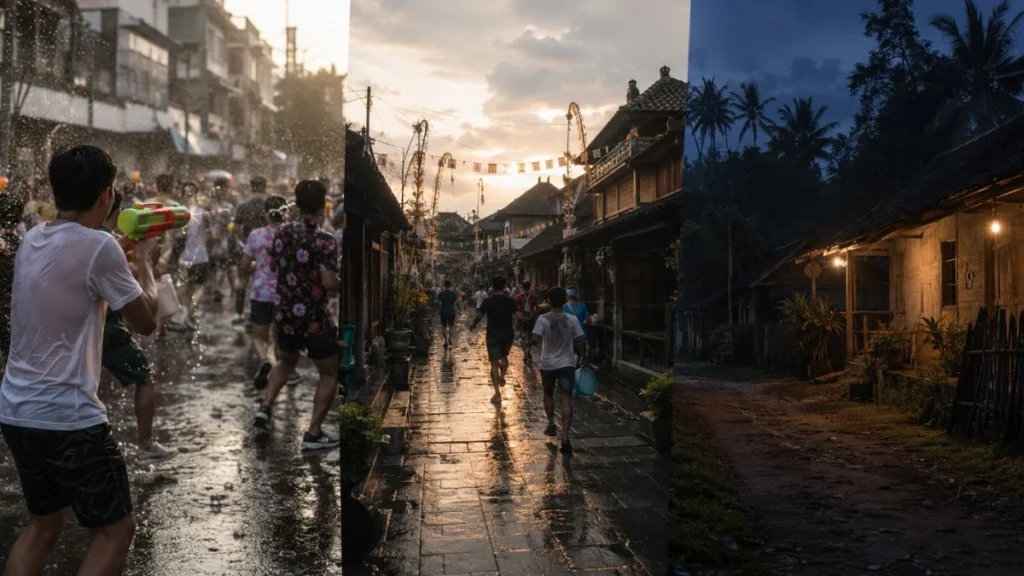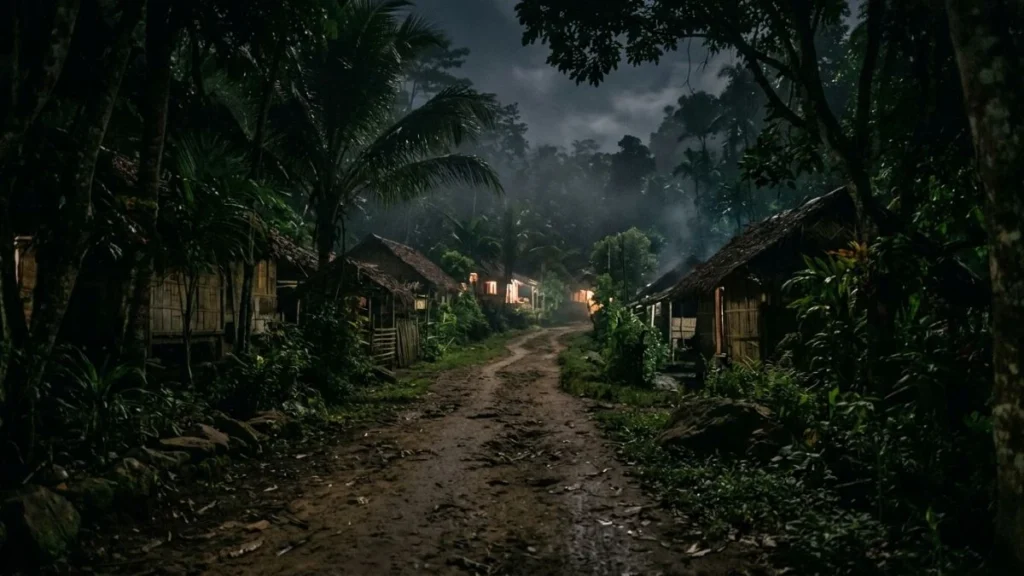
A parent hears a child whistling absentmindedly after dark and immediately, almost reflexively, tells them to stop. No lengthy explanation is usually offered — just a quiet, urgent “don’t.” This exact small moment repeats itself across households in Indonesia, the Philippines, Thailand, and Vietnam, among other places, pointing to a whistling at night superstition so widespread across Southeast Asia that it starts to look less like isolated folklore and more like a shared regional instinct.
The Belief Itself
Across much of Southeast Asia, whistling after dark is believed to attract the attention of unseen spirits, ghosts, or malevolent entities, effectively functioning as an invitation for something otherworldly to draw near. The specifics vary by country and community, but the underlying logic is remarkably consistent: nighttime is understood as a period when spiritual boundaries thin, and a whistle — a clear, carrying, almost otherworldly sound in itself — is thought to call out into that thinned boundary in a way ordinary noise doesn’t.
In parts of Indonesia, the belief is often tied specifically to kuntilanak and other local spirit figures said to be drawn toward the sound. In the Philippines, similar caution surrounds whistling at night due to belief in wandering spirits and engkanto, nature entities said to respond to human calls after dark. Thai and Vietnamese folk traditions carry parallel warnings, often tied to inviting wandering or restless spirits, particularly near homes, cemeteries, or forested areas.
Where It Comes From
The belief’s exact origins are difficult to trace to a single source, largely because it appears to have developed somewhat independently, or through long-standing cultural exchange, across multiple distinct Southeast Asian spiritual traditions — animist, Buddhist, and folk-Islamic among them — that share overlapping ideas about spirits, nighttime, and sound as a kind of spiritual signal or summons.
A more practical, secondary explanation often travels alongside the spiritual one: whistling at night in rural, sparsely populated areas historically could also attract unwanted human attention — bandits, thieves, or hostile strangers using sound to locate one another in the dark. Some cultural historians suggest the supernatural framing may have partly reinforced, or grown alongside, this very practical safety concern, giving a frightening, memorable cultural reason to reinforce a genuinely useful nighttime caution: stay quiet, don’t draw attention, after dark.
How It’s Practiced Today
The custom persists strongly as an inherited, largely unquestioned household rule, passed down primarily through casual correction rather than formal explanation — children are told not to whistle at night long before they ever hear the actual folklore behind the warning, if they hear it explained at all. Many adults across the region admit to still instinctively avoiding nighttime whistling, even when they don’t personally hold strong supernatural beliefs, simply because the caution feels too deeply ingrained to casually ignore.
Rural and more traditional communities tend to maintain the belief with greater seriousness, sometimes extending the caution to include not answering when you hear an unexplained whistle at night, out of concern it might be a spirit attempting to lure a response. Urban, younger populations across the region often treat the belief more lightly, sometimes only half-seriously, though the instinct to avoid whistling after dark frequently persists even among those who describe themselves as skeptical.
What Outsiders Get Wrong
Visitors sometimes assume this is a narrowly Indonesian or Filipino superstition specific to one culture, missing how consistently the belief, or close variations of it, appears across the wider region. Treating it as a single country’s isolated folk tale misses the more interesting pattern: a shared regional intuition about nighttime, sound, and spiritual boundaries that developed across multiple distinct cultures with overlapping but independently evolved reasoning.
There’s also a tendency to dismiss the belief as purely superstitious without appreciating its plausible practical safety roots, or to treat it as something only older, rural populations still observe, when in practice the instinct quietly persists across a much broader demographic than casual observation might suggest.
Reader FAQ
Is whistling at night considered rude, or dangerous, or both?
It’s generally framed as spiritually risky rather than socially rude — the concern is inviting unwanted attention from spirits, not offending the people around you.
Which countries in Southeast Asia hold this belief?
Variations appear widely across Indonesia, the Philippines, Thailand, and Vietnam, among others, each shaped by that culture’s own specific spirit folklore and regional traditions.
Is there a practical, non-supernatural explanation for the custom?
Some researchers suggest the belief may be intertwined with older, practical caution around nighttime safety, since sound like whistling could historically attract unwanted human attention in sparsely populated areas after dark.
Do young, urban Southeast Asians still follow this custom?
Many do, at least instinctively, even while describing themselves as not particularly superstitious, suggesting the custom persists partly through habit rather than active belief alone.
Is it considered acceptable to whistle indoors at night?
Generally the caution applies most strongly outdoors, though some households extend the same instinctive avoidance indoors after dark as well, particularly in more traditional or rural settings.