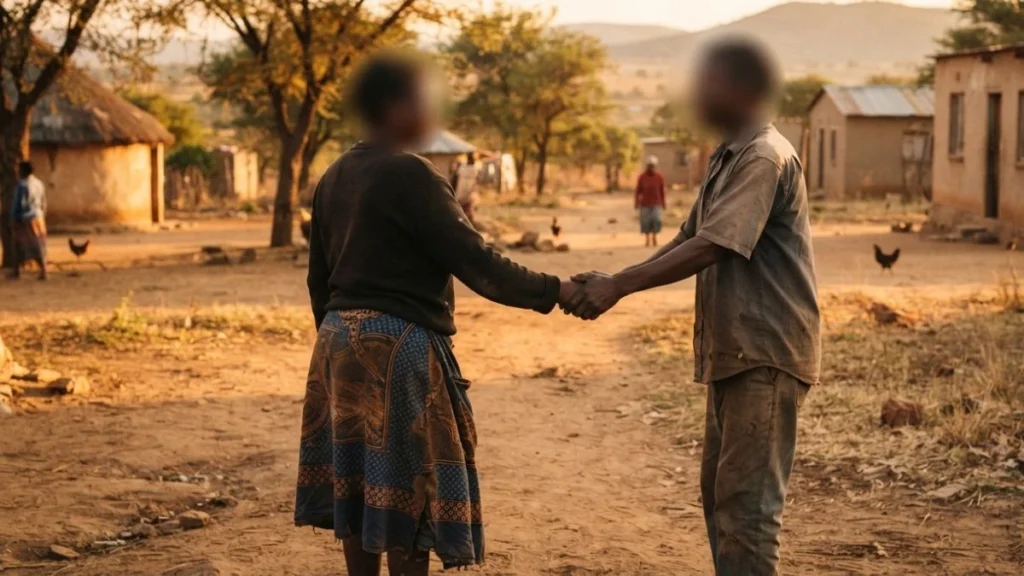
Most greetings function as social autopilot — a word exchanged quickly, barely registered, clearing the path to the actual conversation. Sawubona, the Zulu greeting used across much of southern Africa, was built to work differently. Its literal meaning asks something of both speaker and listener that a casual “hello” never does: genuine acknowledgment of another person’s presence and existence.
What It Literally Means
Sawubona breaks down roughly as “we see you” — combining the plural subject prefix (traditionally reflecting the speaker acknowledging the greeted person on behalf of their ancestors or community, not just as an individual) with bona, to see. The customary response, yebo, sawubona (“yes, we see you too”) or sikhona (“we are here”), completes a small ritual exchange built around mutual acknowledgment rather than simple information transfer.
Crucially, “seeing” in this context carries weight well beyond literal vision. It implies genuinely registering another person’s humanity, presence, and worth — an acknowledgment that the person greeted matters and is recognized, not simply noticed in passing.
Where It Comes From
Sawubona’s deeper cultural logic connects closely to ubuntu, the broader Southern African philosophical concept often summarized as “I am because we are,” which frames individual identity and worth as fundamentally interconnected with community and mutual recognition rather than existing in isolation. Where ubuntu describes a broad philosophy of shared humanity, sawubona operationalizes a small piece of that philosophy into a specific, repeatable daily ritual — every greeting becomes a small, concrete enactment of the larger cultural value that people exist significantly through being recognized by others.
The greeting’s roots lie in Zulu and broader Nguni Bantu cultural tradition in southern Africa, developed within communities where relational recognition and social bonds carried, and continue to carry, considerable weight in daily social structure and interaction.
How It’s Used Today
Sawubona remains in active, everyday use as a standard Zulu greeting across South Africa and neighboring regions with Zulu-speaking populations, used in casual daily interactions much the way “hello” functions in English, though carrying its fuller original meaning more consciously in more formal or intentional contexts, such as community gatherings, formal introductions, or moments where genuine acknowledgment specifically matters.
The concept has also traveled somewhat into international business and organizational culture, occasionally referenced in discussions of workplace culture or leadership philosophy as a model for genuine acknowledgment and presence in professional interactions — a usage that, like ubuntu’s own international popularity, sometimes risks flattening the term into a motivational buzzword somewhat detached from its specific cultural and linguistic context.
Within South Africa itself, sawubona sits alongside several other greetings from the country’s numerous official languages, and code-switching between greetings from different South African languages is common in the country’s linguistically diverse daily life, particularly in urban, multicultural settings.
Why English Doesn’t Have This Word
English “hello” carries no built-in acknowledgment content at all — it’s a pure conversational opener, functionally empty of meaning beyond signaling the start of interaction. Sawubona’s structure requires something different: an active claim of genuine perception and recognition, met with an active confirming response, turning even a brief daily greeting into a small structured moment of mutual acknowledgment that English’s default greeting vocabulary simply doesn’t build in.
This gap reflects a broader difference in cultural emphasis rather than simple vocabulary absence — English-speaking greeting culture generally doesn’t require or expect this level of built-in relational acknowledgment as a matter of linguistic structure, treating it instead as something added through tone, eye contact, or extended conversation rather than embedded directly into the greeting word itself.
The Universal Takeaway
Sawubona offers a small but genuinely useful provocation: what would change if every greeting required an active claim of really seeing the other person, and an active confirmation of being seen in return? Most people intuitively know the difference between a greeting that’s genuinely felt and one that’s simply performed on autopilot — sawubona builds that distinction directly into its literal structure, making the more meaningful version the linguistic default rather than an occasional exception.
FAQ
What is the correct response to sawubona?
The traditional response is “yebo, sawubona” (yes, we see you too) or “sikhona” (we are here), completing the mutual acknowledgment built into the greeting exchange.
Is sawubona connected to the concept of ubuntu?
Yes, closely — sawubona is often understood as a small, everyday enactment of ubuntu’s broader philosophy of interconnected humanity and mutual recognition.
Is sawubona used only in formal settings?
No, it’s used as a standard everyday greeting in casual interactions as well, though its fuller symbolic weight is often more consciously emphasized in formal or intentional contexts.
Why does sawubona use “we” instead of “I”?
The plural form traditionally reflects greeting someone on behalf of the speaker’s community or ancestors, not solely as an individual, reinforcing the greeting’s communal, relational framing.
Is sawubona specific to the Zulu language only?
It’s specifically a Zulu greeting, though South Africa has multiple official languages with their own related greetings, and sawubona itself is widely recognized beyond strictly Zulu-speaking communities.