Tarab Arabic word describes a profound state of emotional and musical ecstasy that can arise during a traditional Arabic performance. A singer may hold a note far longer than seems physically possible, and the audience doesn’t simply applaud—some weep openly, others call out spontaneously, and a few appear to enter something close to a trance. Far from being unusual, this is the response performers hope to inspire. The concept of tarab captures a depth of emotional transport through music that English has no single word to express.
What It Literally Means
Tarab describes a state of intense emotional and spiritual transport induced specifically by music — not mere enjoyment or appreciation, but something closer to rapture, ecstasy, or emotional overwhelm brought on by a musical performance, particularly vocal performance rooted in classical Arabic musical tradition. The word functions as both a description of the listener’s emotional state and, more broadly, as a name for an entire musical tradition and aesthetic built specifically around achieving this effect.
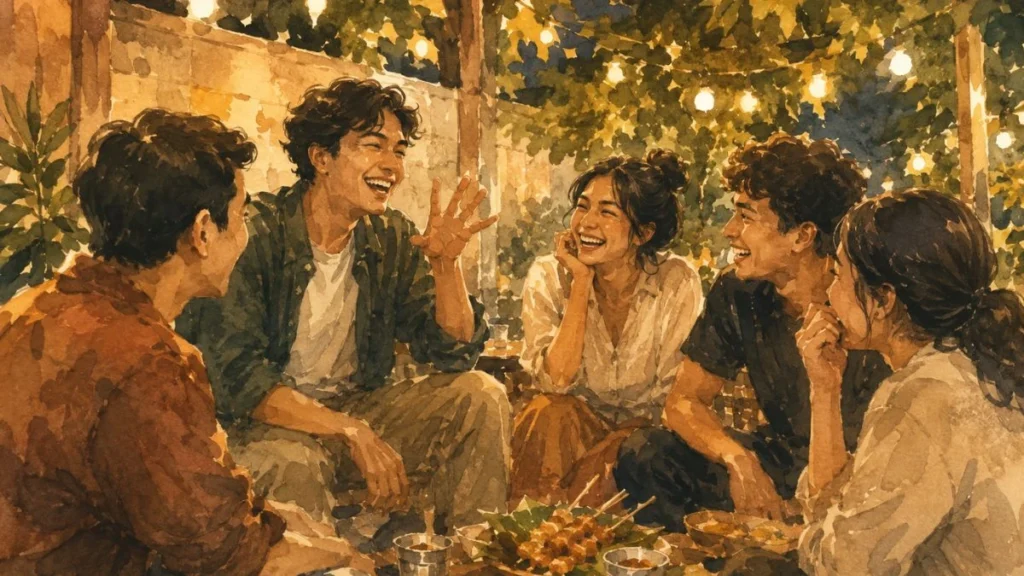
Tarab isn’t considered a passive listening experience. It’s understood as an active, almost participatory emotional event, occurring in the charged space between performer and audience, with the audience’s visible emotional response often actively shaping and intensifying the performer’s delivery in return — a genuine feedback loop rather than one-directional entertainment.
Where It Comes From
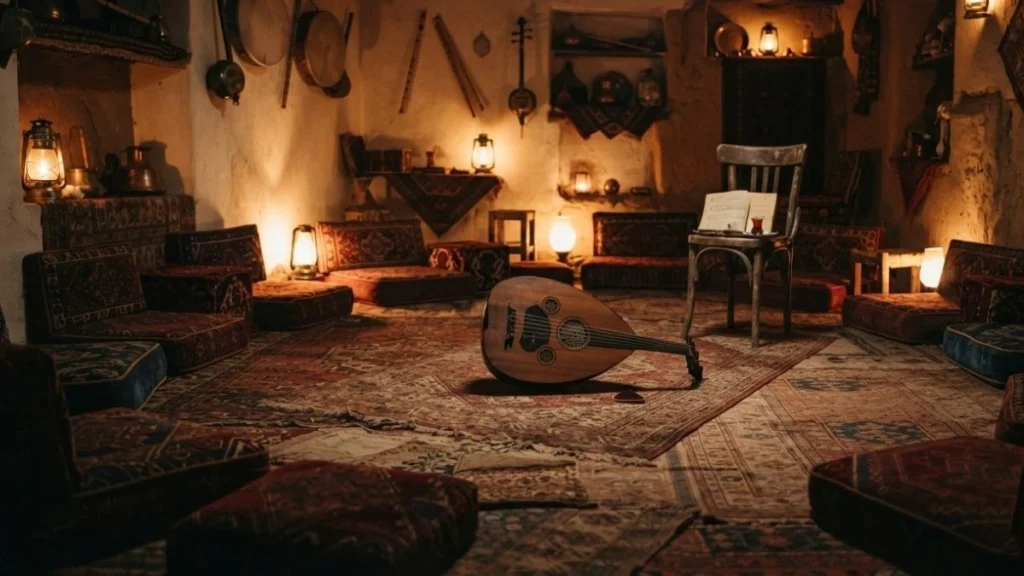
Tarab’s roots run deep into classical Arabic musical tradition, particularly the maqam system — a complex framework of melodic modes central to Arabic, Turkish, and broader Middle Eastern classical music, built around microtonal intervals and improvisational structures specifically suited to building and releasing intense emotional tension across a performance. The tradition reached particular prominence and refinement in Egypt during the early-to-mid 20th century, closely associated with legendary vocalists whose performances became famous specifically for their ability to induce tarab in audiences through extended, emotionally building renditions of classical songs.
Unlike Western classical or popular music traditions built around fixed compositions performed largely as written, tarab-oriented performance traditionally involves significant vocal and instrumental improvisation, allowing a skilled performer to read audience response in real time and extend, repeat, or intensify particular musical phrases specifically to deepen the emotional transport being achieved collectively in the room.
How It’s Used Today
Tarab remains a living concept in contemporary Arabic musical culture, particularly in traditional and classical performance contexts, though its most intense, immersive expressions are increasingly associated with older performance traditions rather than mainstream contemporary Arabic pop music, which has moved toward more Western-influenced fixed song structures less built around extended improvisational tension and release.
Audiences experienced in tarab-oriented musical traditions are understood to actively participate through vocal responses — exclamations of appreciation, requests for a performer to repeat a particularly powerful phrase — functioning as an integral part of achieving tarab rather than a disruption to be minimized, a relationship between performer and audience considerably more interactive than typical Western concert-hall listening norms, where silence and stillness are the expected audience posture.
The word itself has also traveled somewhat into broader English-language music writing and ethnomusicology, used specifically to describe this Arabic musical aesthetic and emotional tradition in academic and journalistic contexts discussing Middle Eastern classical music.
Why English Doesn’t Have This Word
English has “moved,” “captivated,” or “spine-tingling,” but none capture tarab’s specific combination of collective, performance-dependent emotional transport built through structured musical tension and release, nor its understanding of audience response as an active, shaping part of the musical event itself rather than passive appreciation happening after the fact.
There’s also a structural gap: English-language musical vocabulary doesn’t have a strong equivalent term for a musical tradition specifically organized around achieving one particular, named emotional state as its central aesthetic goal — tarab isn’t simply a side effect of good music in this tradition, it’s the explicit, structurally built-toward purpose of the performance itself.
The Universal Takeaway
Tarab points to something many music lovers recognize in fragments but rarely name precisely: certain musical moments transport listeners somewhere considerably beyond ordinary enjoyment, into something closer to genuine emotional or even spiritual displacement. Most musical traditions have their own version of this peak experience, but few have built an entire performance philosophy, vocabulary, and audience relationship as explicitly and deliberately around naming and pursuing it as classical Arabic musical tradition has with tarab.
FAQ
Is tarab specific to a particular type of Arabic music?
It’s most closely associated with classical Arabic musical tradition built on the maqam melodic system, particularly vocal performance, though the concept can apply more broadly within Arabic musical culture.
Do audiences actively participate during a performance aiming for tarab?
Yes, vocal responses and requests for repetition from audience members are traditionally understood as an active part of building tarab, rather than a disruption to the performance.
Is tarab still present in contemporary Arabic pop music?
Its most intense, improvisation-driven expressions are more strongly associated with classical and traditional performance contexts, as much contemporary Arabic pop has adopted more fixed, Western-influenced song structures.
Is tarab connected to any specific historical period?
It’s particularly associated with a golden era of Egyptian classical music in the early-to-mid 20th century, though the underlying tradition and concept extend both before and after that specific period.
Is there an equivalent concept in other music traditions?
Various musical traditions worldwide have their own concepts of intense emotional or spiritual musical transport, though tarab’s specific vocabulary, structure, and performer-audience relationship are distinctly rooted in Arabic musical tradition.