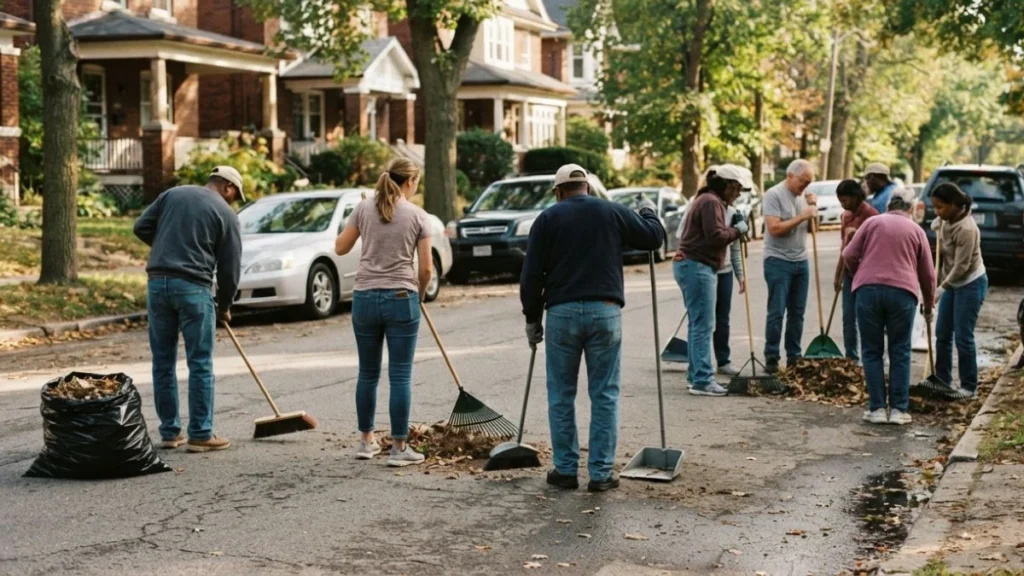
Every guidebook and cultural primer describes gotong royong the same way: a beautiful Indonesian tradition of communal mutual aid, neighbors working together, nobody left to struggle alone. All of that is true. What most of those same descriptions leave out is the quieter, more complicated reality anyone who actually grew up inside the practice knows well — that showing up isn’t always a choice, and saying no carries a cost few outsiders ever hear about.
What It Literally Means
Gotong royong combines gotong (to carry, especially something heavy, together) and royong (an old term connected to mutual, cooperative effort), forming a phrase that translates roughly to “carrying a burden together.” In practice, it describes a community coming together, unpaid, to complete shared work — cleaning a neighborhood, building a small structure, preparing for a village event, or helping a family through a major life moment like a wedding or funeral.
It’s often cited, accurately, as one of Indonesia’s defining cultural values, even written into national symbolism and civic education as an ideal of collective harmony and social solidarity.
Where It Comes From
The practice long predates its modern political framing, rooted in village-level agrarian life across the archipelago, where cooperative labor — planting, harvesting, building, repairing — was often genuinely necessary for survival in small, interdependent communities. Its elevation into a defining symbol of Indonesian national character came later, most notably championed by Sukarno, Indonesia’s first president, who framed gotong royong as a core pillar of Indonesian identity and even proposed it as an alternative philosophical foundation for the state itself.
That political elevation matters, because it shifted gotong royong from a practical village custom into something closer to a civic expectation — a value actively promoted, taught, and in some periods, formally organized by local government structures, rather than something that simply arose and dissolved organically within communities as needed.
How It’s Actually Used Today
In many neighborhoods, gotong royong still functions largely as originally intended — genuine, willingly offered mutual aid, especially around weddings, funerals, and community events, where showing up to help is motivated by real relationship and reciprocity. This is the version most commonly described, and it’s not exaggerated; it remains a real, functioning social structure in countless communities.
But alongside that genuine version exists a more obligatory one, especially around routine neighborhood upkeep — communal cleaning days, local infrastructure repairs, or preparations for official events — where participation is expected rather than freely offered, and skipping without a strong excuse can quietly affect how a household is perceived by neighbors and local leadership. In some communities, informal or even formal small fines exist for households that don’t send a representative to scheduled gotong royong activities, a detail rarely mentioned in the tradition’s more polished cultural descriptions.
This obligatory layer tends to fall disproportionately on those with the least flexibility to opt out — renters more than homeowners, lower-income households more than wealthier ones who might pay a substitute or simply absorb the social cost of skipping. The unspoken social pressure is real precisely because gotong royong’s cultural prestige makes refusal look bad regardless of a person’s actual circumstances or constraints.
The Uncomfortable Side Locals Don’t Talk About Much
Growing up around gotong royong means absorbing, early and without much explanation, that “communal” doesn’t always mean “chosen.” A household juggling multiple jobs, illness, or simply exhaustion still faces the same informal expectation to appear at a Sunday morning cleanup as a household with more free time, and the social consequences of visible absence — quiet judgment, reduced standing, occasionally a direct comment from a neighborhood leader — apply fairly evenly regardless of the reason.
This isn’t a betrayal of the tradition’s values so much as an honest acknowledgment of how communal obligation actually functions in practice: even genuinely good collective norms can quietly become a source of pressure, particularly for people with the least social or economic flexibility to say no. Most Indonesians who grew up inside gotong royong culture understand this tension intuitively, even if it rarely gets said out loud to outsiders eager to hear only the tradition’s warmer, more idealized version.
Why English Doesn’t Have This Word
English has “community service,” “volunteering,” and “neighborly help,” but none of these carry gotong royong’s specific blend of genuine cultural warmth and quiet, semi-enforced social obligation existing side by side within the same practice. “Volunteering” in English generally implies a real choice; gotong royong occupies a much blurrier space, where the line between willing participation and quiet social pressure isn’t always clear even to the people living inside it.
The Universal Takeaway
Every culture has some version of collective obligation dressed in the language of choice — the office happy hour attendance that isn’t quite mandatory but is quietly tracked, the neighborhood association dues nobody wants to be the one to skip. Gotong royong is a particularly vivid, well-documented version of that same universal tension: genuine communal good, and quiet social pressure, coexisting in the very same tradition, often without either side canceling the other out.
FAQ
Is gotong royong always voluntary?
Not entirely. While much of it, especially around weddings and funerals, is genuinely willing mutual aid, routine neighborhood activities often carry real social expectation, and sometimes small formal penalties, for households that don’t participate.
Are there penalties for skipping gotong royong?
In some communities, yes — informal social judgment is the most common consequence, though small formal fines for non-participation in scheduled neighborhood activities exist in certain areas.
Is gotong royong a government-organized practice?
It can be both organic and government-encouraged. Local administrative structures in many areas actively schedule and promote gotong royong activities, blending traditional custom with a degree of civic organization.
Who tends to feel the most pressure around gotong royong obligations?
Households with less flexibility — renters, lower-income families, or those juggling demanding work schedules — often feel the obligatory side of gotong royong more acutely than households with more free time or resources to absorb the social cost of occasional absence.
Does criticizing this side of gotong royong mean the tradition is bad?
No — most people who point out this tension still value gotong royong’s genuine communal benefits. The point isn’t that the tradition is flawed, but that its idealized description often leaves out a real, lived complexity.