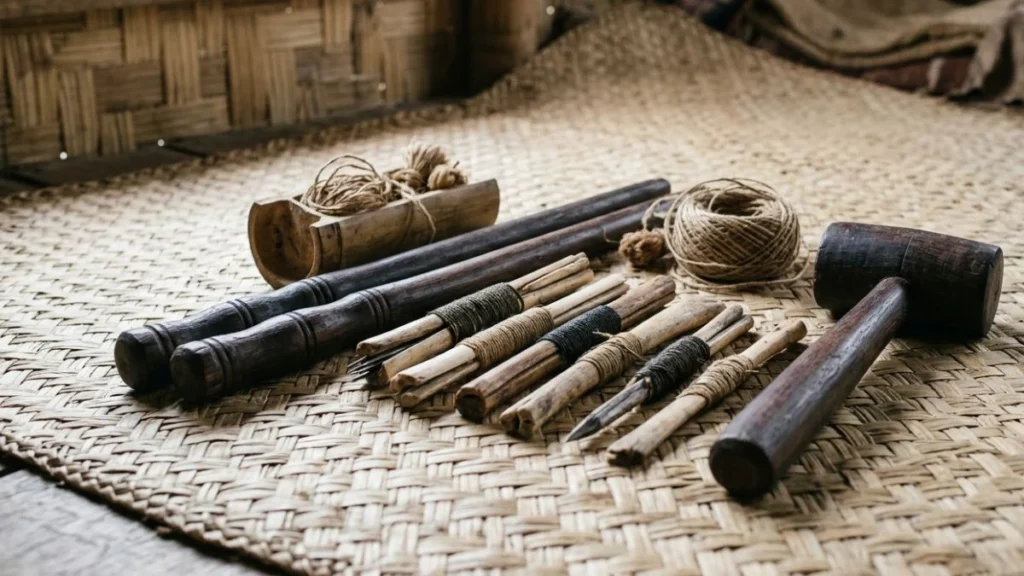
Tattoos existed in cultures around the world long before the English word for them did. The origin of the word “tattoo” traces to a single, specific source — Polynesian, most directly Tahitian — and its adoption into English carries the same pattern of colonial-era language contact seen in words like “amok” and “orangutan”: a term extracted from a rich, specific cultural practice, then flattened into a general-purpose English word largely stripped of its original context.
What It Literally Means
The English word “tattoo,” in the body-marking sense, derives from the Tahitian and broader Polynesian word tatau, referring to the traditional practice of marking skin through repeated puncturing, historically carrying deep spiritual, social, and genealogical significance rather than functioning as a purely decorative or individualistic choice, as it’s often understood in much of contemporary Western usage. The Tahitian term itself is widely believed to be onomatopoeic, echoing the tapping sound of the traditional tattooing tool striking the skin during the process.
Crucially, tatau in its original Polynesian context wasn’t a generic word for any body marking — it referred to an entire structured cultural practice, often communicating specific information about a person’s genealogy, social rank, achievements, or life stage, readable within the community according to established visual conventions passed down across generations.
Where It Comes From
European contact with Polynesian tattooing traditions intensified significantly during 18th-century Pacific exploration voyages, most famously documented through Captain James Cook’s expeditions to Tahiti and other Pacific islands beginning in 1769. English-language accounts from Cook’s voyages, particularly through crew member and naturalist Joseph Banks, are widely credited with introducing both the practice’s vivid visual impact and the Tahitian word itself into English vocabulary, where it was anglicized into “tattoo” and rapidly popularized following the voyagers’ return to Britain.
This pattern — a specific, culturally rich term extracted through colonial-era contact, then absorbed into English following a notable, well-documented encounter — closely mirrors the trajectory of “amok,” another word covered elsewhere on this site that entered English through similar 17th and 18th-century colonial contact in a different part of the world, gradually losing much of its original specificity as it settled into standing English usage.
How It’s Used Today
In modern English, “tattoo” functions as a broad, general term covering any form of permanent skin marking through ink, regardless of style, cultural origin, or meaning — a considerable flattening from tatau’s original, highly specific Polynesian cultural and social framework. Contemporary Western tattoo culture frequently treats the practice as an individual aesthetic or personal expression choice, a framing that differs substantially from tatau’s traditional emphasis on communal, genealogical, and socially legible meaning within a specific cultural structure.
Traditional Polynesian tattooing practices themselves have experienced significant cultural revival in recent decades across Pacific Island communities, with practitioners and cultural advocates working to reclaim and reassert the practice’s original depth, technique, and meaning, partly in response to global tattoo culture’s widespread, often decontextualized borrowing of Polynesian-style visual motifs without engagement with their original cultural significance.
Why This Word Traveled the Way It Did
Tattoo’s journey into English reflects a broader, recurring pattern in colonial-era language contact: European explorers and writers, encountering a vivid, unfamiliar cultural practice, extracted a convenient descriptive term while engaging only partially, at best, with the practice’s fuller cultural context and meaning. The word survived and spread widely; much of its original specific significance did not travel with it into common English usage, similar to how “orangutan” retained its borrowed sound while losing its original broader Malay meaning along the way.
This pattern is worth naming clearly rather than treating as incidental etymological trivia: the ease with which English absorbed a striking foreign word, while largely setting aside the fuller cultural framework it originally described, reflects a genuinely recurring historical dynamic in how colonial-era contact shaped the English language more broadly.
The Universal Takeaway
Tracing “tattoo” back to tatau is a reminder that even extremely common, everyday English words can carry surprisingly specific, often underacknowledged cultural origins — and that a word’s wide adoption doesn’t necessarily mean the practice or meaning it originally described was equally well understood or respected in the process. Knowing this history doesn’t require abandoning the word, but it does offer a fuller, more honest picture of where it actually came from.
FAQ
Does “tattoo” come from a single Polynesian language, or several?
The word most directly derives from Tahitian tatau, though closely related terms and the broader tattooing tradition itself existed across multiple Polynesian cultures prior to European contact.
When did “tattoo” enter the English language?
The word became widely known and adopted into English following 18th-century Pacific voyages, particularly Captain Cook’s expeditions to Tahiti beginning in 1769, which brought detailed European accounts of the practice back to Britain.
Did tattooing exist in other cultures before European contact with Polynesia?
Yes, various forms of body marking existed independently in numerous cultures worldwide, but the specific English word “tattoo” itself derives directly from the Polynesian term rather than any of these other traditions.
Is traditional Polynesian tattooing the same as modern Western tattoo culture?
They share the underlying practice of permanent skin marking, but traditional tatau carried specific genealogical, social, and spiritual meaning within structured cultural conventions, differing significantly from tattooing’s more individualistic framing in much of contemporary Western culture.
Is there ongoing cultural revival of traditional Polynesian tattooing?
Yes, Pacific Island communities and practitioners have worked in recent decades to reclaim and reassert traditional tattooing techniques and meanings, partly in response to widespread global borrowing of Polynesian visual styles without their original context.